|
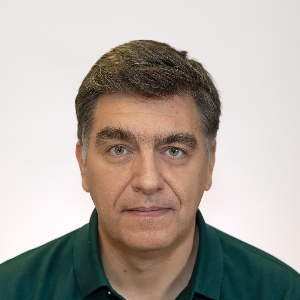
Ioannis Manakos
Centre for Research and Technology Hellas
Greece
http://eos.iti.gr/
|
Brief Bio
Ioannis Manakos holds a Diploma in Geology from the Aristotle University of Thessaloniki (AUTh), an MSc in Land Improvements from AUTh, and a PhD in Forestry from the Technical University of Munich (TUM). At TUM he focused on remote sensing, field spectroradiometry, and reflectance modelling. He served as Associate Professor in Remote Sensing at Higher Educational Foundations (current constituent elements of the International University) of Greece and contributed to vocational education. From 2005 to 2012 he was Studies and Research Coordinator of the MSc “Geoinformation in Environmental Management” at the Intern
ational Centre for Advanced Mediterranean Agronomic Studies/ Mediterranean Agronomic Institute of Chania (CIHEAM/MAICh), leading international projects on land use, biodiversity, and ecosystem monitoring. Since 2012 he has been with the Centre for Research and Technology Hellas/ Information Technologies Institute (CERTH/ITI), where he currently serves as Research Director in Remote Sensing, directing EU-funded Earth observation services for agriculture, water quality, urban development, and habitat monitoring. In 2025 he joined the Institute for Environmental Sciences, University of Geneva, as Visiting Faculty. His work spans the Earth-observation pipeline: sensors, UAVs, open data cubes, machine learning, and operational service deployment, and includes the design of field spectroradiometric instruments. He collaborates through Copernicus Academy, Group on Earth Observations (GEO), European Association of Remote Sensing Laboratories (EARSeL - former chair), GOFC-GOLD/SCERIN and MEDRIN, and NASA LCLUC. He has 18+ years of research leadership, mentorship, proposal evaluation, and scientific committee service, 30+ thesis supervisions, 44+ journal papers, and a 2023 Water Europe nomination ‘Global Water Challenges Award’ for the Copernicus Assisted Lake Water Quality Emergency Monitoring Service (WQeMS) platform.
... More >>
|
Lemonia Ragia
Hellenic Open University
Greece
|
Brief Bio
Lemonia Ragia has a diploma degree from the Department of Rural and Surveying Engineering at the Aristotle University of Thessaloniki, Greece. Her doctoral degree was at the Institute of Photogrammetry, University of Bonn, Germany. After completing her doctoral thesis she was a Postdoctoral Fellow at Knowledge Discovery Team, Fraunhofer Institute for Autonomous Intel lnteligent Systems (IAIS now) working on spatial data mining. After that she worked as a senior research scientist at the Information Systems and Database Technology of the Computer Science Department of the Technical University of Aachen, Germany wo
rking in the area of spatial data bases and data integration. In 2003 she visited the database group of Phil Bernstein at Microsoft Research, Seattle, USA to work on model management and schema matching. After that she is Maitre Assistant at the University of Geneva, Switzerland working on location based services and 3D modelling of spatial data in the Advanced Systems Group. She was a Visiting Professor at the University of Toronto, Canada working on high performance visualization of spatial information in the Dynamic Graphics Project. She is now working at the area of restoration of historic buildings in Technical University of Crete.
... More >>
|
Richard Lucas
Aberystwyth University
United Kingdom
|
Brief Bio
Professor Richard Lucas (Aberystwyth University’s Department of Geography and Earth Science) has over 35 years of experience in multi-scale temporal characterisation of primarily vegetated environments from Earth observation data in support of ecological, biogeographical, carbon cycle and climate science, with this obtained primarily through academic research/teaching and government-related positions in Australia and the UK He continues to lead the conceptual development and implementation of the globally applicable Living Earth approach for consistent characterisation, mapping and monitoring of environments fr
om spaceborne data and has provided significant contributions to the generation of global products including forest extent (with the Japan Aerospace Exploration Agency (JAXA)), woody above ground biomass (with the European Space Agency’s (ESA) Climate Change initiative) and mangrove extent and change (the Global Mangrove Watch, with Wetlands International and The Nature Conservancy). At national to regional levels, he has developed innovative products on secondary forests vegetation structure and land cover (including in Amazonia, Africa, Australia, Wales), that have increased understanding of ecosystem states and dynamics and environmental change. He has contributed to policy and land management agendas and engaged in public understanding of Earth observation science and global environmental issues.
... More >>